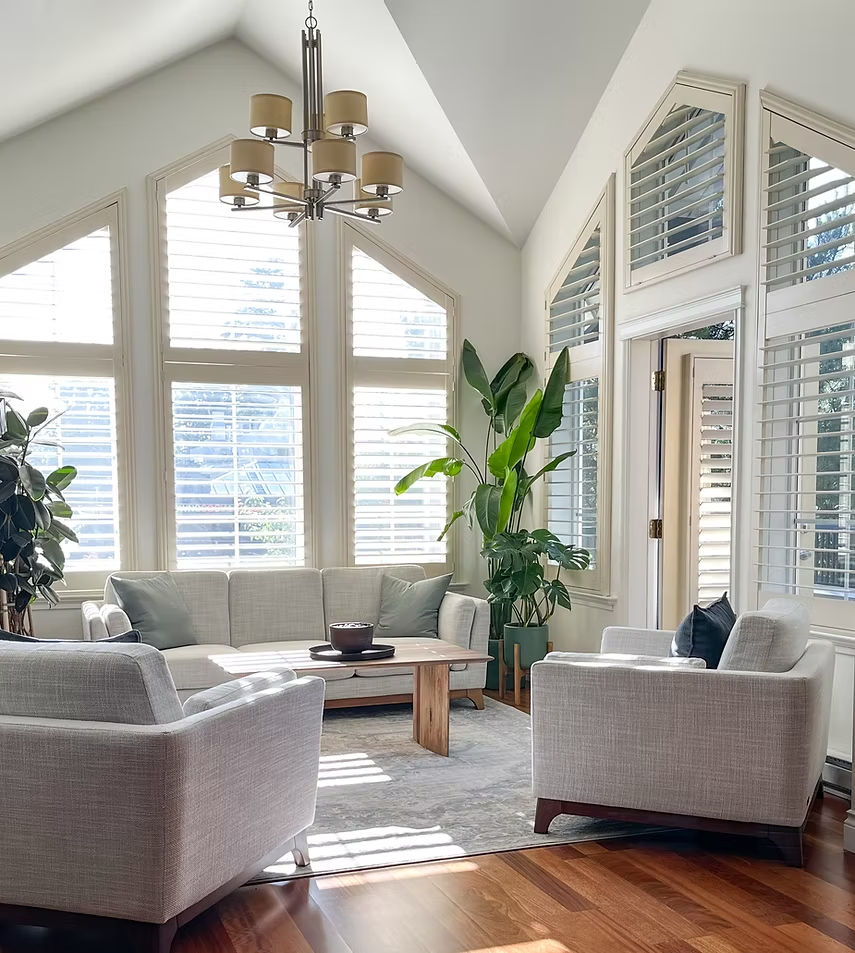
Basements can add valuable living space to a home, but they often come with one common challenge: limited natural light.
For homeowners in Barrhaven and Riverside South, finished basements may serve as family rooms, home offices, guest bedrooms, gyms, playrooms, entertainment spaces, or even secondary living areas. However, because many basements have smaller windows, lower ceilings, fewer exterior openings, and more artificial lighting, the wrong paint colors can make the space feel darker and more confined than it actually is.
Professional interior painting can significantly improve the way a basement feels.
The right paint color can help reflect available light, reduce harsh visual boundaries, create better contrast with flooring and furniture, and make the basement feel more connected to the rest of the home.
The key is not simply choosing the lightest possible shade.
A basement’s flooring, ceiling height, artificial lighting, window direction, trim, furniture, and overall layout all influence how paint performs.
Low Mountain Painting provides professional interior painting services throughout Barrhaven, Riverside South, Kanata, Stittsville, Manotick, Greely, and surrounding Ottawa communities, helping homeowners create brighter, more comfortable basement interiors with carefully selected colors and professional finishes.
Why Basements Often Feel Dark
Basements naturally receive less daylight than upper floors.
Common reasons include:
- Smaller windows
- Below-grade walls
- Limited sun exposure
- Deep room layouts
- Lower ceilings
- Dark flooring
- Insufficient artificial lighting
Even a large basement can feel visually heavy if these factors are combined with dark or poorly coordinated paint colors.
Paint Can Change How Light Moves Through a Basement
Paint does not create light, but it can influence how existing light is perceived.
Lighter colors generally reflect more visible light than darker shades.
This can help:
- Brighten walls
- Reduce shadow
- Improve visual openness
- Make artificial lighting feel more effective
The overall effect can make the basement feel more inviting.
Warm White Is Often a Strong Choice
Warm white is one of the most versatile basement colors.
It can create a brighter appearance without making the room feel cold or sterile.
Warm white can work well with:
- Beige carpet
- Natural wood
- Vinyl plank flooring
- Grey flooring
- Black furniture
- White trim
It also provides a flexible background for future furniture and décor changes.
Avoid Stark White in Some Basements
A very cool or blue-based white can sometimes make a basement feel harsh, especially under cool artificial lighting.
Warmer whites can help create a more comfortable atmosphere.
The exact shade should be tested under the basement’s actual lighting before the final decision is made.
Light Greige Can Add Warmth and Brightness
Greige combines grey and beige.
A light greige can help brighten the basement while still providing more depth than plain white.
It pairs well with:
- Wood flooring
- Neutral carpet
- Black accents
- White trim
- Contemporary furniture
This makes it a practical choice for family rooms and multipurpose spaces.
Soft Beige Can Make the Basement Feel More Comfortable
Soft beige can work especially well in basements with:
- Warm lighting
- Brown flooring
- Wood furniture
- Traditional décor
Modern beige is much more subtle than older builder-grade tan colors.
A pale beige can help the basement feel warm without making it look dated.
Pale Taupe Can Add Sophistication
Taupe is another strong neutral for basement interiors.
A light taupe can create a more refined appearance while still maintaining brightness.
It may work especially well in:
- Home theatres
- Guest rooms
- Family rooms
- Home offices
Muted Sage Can Add Color Without Making the Basement Feel Dark
Homeowners do not need to use neutral colors everywhere.
Muted sage green can introduce personality while remaining soft enough for lower-light spaces.
It can pair beautifully with:
- Natural wood
- Warm white trim
- Beige flooring
- Black fixtures
This is useful for offices, guest rooms, and relaxation spaces.
Light Blue Can Work With the Right Lighting
Soft blue can create a calm and fresh appearance.
However, blue undertones can become stronger under cool artificial lighting.
Homeowners should test blue samples carefully to make sure the room does not feel colder than intended.
Dark Colors Can Still Work in Basements
Dark colors are not automatically wrong.
In fact, they can work beautifully when the goal is creating:
- A media room
- A home theatre
- A games room
- A sophisticated lounge
Deep navy, charcoal, forest green, and warm brown can create dramatic spaces.
The key is understanding that these colors will usually make the room feel more enclosed rather than brighter.
For homeowners trying to maximize perceived light, lighter colors are generally more effective.
Use Dark Colors Strategically
Instead of painting the entire basement dark, homeowners can use deeper colors on:
- A television wall
- A fireplace feature
- Built-in shelving
- A home bar area
- An entertainment wall
This creates visual interest while keeping the rest of the basement brighter.
Ceiling Color Has a Major Impact
Ceilings strongly influence how open a basement feels.
A clean, light ceiling can help reflect artificial light and create the perception of more height.
Popular choices include:
- Bright white
- Warm white
- Light neutral
Flat ceiling paint is commonly used because it reduces glare and helps hide surface imperfections.
Low Ceilings Need Extra Attention
Basements with lower ceilings can feel more compressed.
Painting the ceiling in a lighter color than the walls can help create the perception of height.
Reducing heavy contrast between walls and ceiling can also make the transition feel softer.
What About Exposed Basement Ceilings?
Some basements feature exposed joists, ductwork, or mechanical elements.
These may be painted to create an industrial or contemporary appearance.
Common colors include:
- Black
- Charcoal
- White
Dark exposed ceilings can create a dramatic look but may make the basement feel visually lower.
White or lighter coatings can help maximize brightness.
Trim Can Help Define the Space
Fresh trim creates cleaner visual boundaries.
Baseboards, doors, and window trim may be painted in:
- Warm white
- Clean white
- Coordinated off-white
This can provide contrast against neutral walls while helping the basement feel finished.
Interior Doors Matter Too
Older basement doors may be:
- Scratched
- Yellowed
- Scuffed
- Unevenly touched up
Repainting them can significantly improve the overall appearance.
Doors can either match the trim or provide a subtle contrast.
Basement Windows Should Be Highlighted
Small basement windows are valuable sources of natural light.
Paint colors around them should help maximize that light.
Light wall and trim colors can prevent the window area from feeling boxed in.
Homeowners should also avoid overly heavy window treatments if brightness is the priority.
Artificial Lighting and Paint Need to Work Together
Because basements rely heavily on artificial light, paint should be selected under those conditions.
Lighting can dramatically change color appearance.
Warm bulbs may emphasize:
- Beige
- Yellow
- Cream
Cool bulbs may emphasize:
- Blue
- Grey
- Green
The paint should be tested under the actual bulbs used in the basement.
Consider Lighting Temperature Before Painting
If the existing lighting makes every paint sample look too cool or too yellow, the issue may partly be the bulbs.
Painting and lighting should work together.
Homeowners may want to evaluate:
- Bulb temperature
- Brightness
- Fixture placement
before finalizing wall colors.
Flooring Strongly Influences Basement Color
Basement flooring is one of the largest visual elements in the space.
Common materials include:
- Carpet
- Vinyl plank
- Laminate
- Tile
Wall color should coordinate with the undertones in the floor.
Dark Flooring Needs Lighter Walls
Dark flooring can make a basement feel grounded but also visually heavy.
Lighter walls can create balance.
Good choices may include:
- Warm white
- Pale greige
- Soft beige
- Light taupe
Grey Flooring Needs Undertone Matching
Grey flooring can lean:
- Blue
- Green
- Brown
- Violet
Wall color should coordinate with that undertone.
A mismatched grey wall can make the basement feel cold or disconnected.
Beige Carpet Works Best With Warm Neutrals
Warm beige carpet often pairs well with:
- Warm white
- Greige
- Soft taupe
- Muted sage
A strongly cool wall color can sometimes make warm carpet look more yellow.
Open Basement Layouts Need Color Continuity
Many finished basements include several functional zones within one open space.
These might include:
- Family room
- Play area
- Home office
- Bar
- Exercise area
Using too many unrelated wall colors can make the basement feel smaller.
A primary neutral with selected accent colors often creates better continuity.
Use Architectural Features for Color Changes
If multiple colors are used, transitions should occur at natural boundaries such as:
- Inside corners
- Columns
- Built-in features
- Changes in ceiling height
- Recessed areas
This makes the color scheme feel intentional.
Painting Basement Family Rooms
Family rooms should feel:
- Comfortable
- Bright
- Durable
- Easy to maintain
Eggshell or satin finishes can provide a good combination of appearance and washability depending on the product and traffic level.
Painting Basement Playrooms
Playrooms need durable coatings.
Walls may experience:
- Fingerprints
- Toys
- Furniture contact
- Marks
Washable paint can make maintenance significantly easier.
Painting Basement Home Offices
Home offices can benefit from calmer colors such as:
- Muted sage
- Light greige
- Warm white
- Soft blue
These tones can help create a focused but comfortable environment.
Painting Guest Bedrooms
Guest rooms should feel inviting and flexible.
Good choices may include:
- Warm white
- Pale taupe
- Soft greige
- Muted blue
These colors work with many furniture styles and help maintain brightness.
Painting Home Gyms
Home gyms can use more energetic color, but very dark walls may reduce perceived brightness.
Homeowners might consider:
- Light grey
- Muted blue
- Warm white
- Controlled accent colors
Durability and washability are especially important in active spaces.
Home Theatre Rooms Are Different
Home theatres may intentionally use darker colors to reduce reflection.
Options include:
- Charcoal
- Navy
- Deep brown
- Dark grey
This is one situation where brightness is not necessarily the goal.
Basement Bathrooms Need Moisture-Appropriate Paint
Bathroom walls require coatings designed to tolerate:
- Humidity
- Condensation
- Frequent cleaning
Ventilation remains important.
Paint should not be expected to solve an active moisture problem.
Address Moisture Before Painting
Basements can be more susceptible to moisture than upper floors.
Before repainting, homeowners should investigate signs such as:
- Peeling paint
- Bubbling
- Water stains
- Musty odors
- Damp drywall
- Efflorescence on masonry
Painting over active moisture problems can lead to premature failure.
Why Surface Preparation Is Especially Important in Basements
Basement walls may contain:
- Previous repairs
- Nail holes
- Settlement cracks
- Old patching
- Scuff marks
- Moisture staining
Professional preparation helps create a cleaner finish.
This may involve:
- Cleaning
- Filling
- Sanding
- Repairing
- Spot priming
- Caulking where appropriate
Repair Drywall Before Repainting
Basements often undergo changes over time.
Walls may have damage from:
- Shelving
- Mounted televisions
- Children’s play areas
- Furniture movement
- Renovations
These defects should be repaired before finish coats are applied.
Primer May Be Necessary
Primer may be useful when dealing with:
- Bare drywall
- Repairs
- Stains
- Significant color changes
- Previous dark paint
The correct primer helps create a uniform foundation.
Painting Over Dark Basement Colors
Changing from a deep color to a light neutral may require additional preparation or primer.
Trying to cover a dark wall with insufficient coats can lead to:
- Uneven coverage
- Visible undertones
- Patchiness
Professional product selection helps achieve a more consistent result.
Low-VOC Paint Is Worth Considering
Basements may have less natural ventilation than upper floors.
Low-VOC paints can help reduce emissions and strong paint odors during interior projects.
Modern low-VOC coatings are available in many durable formulations.
Choose a Finish Based on Use
Different basement areas may need different finishes.
Family Rooms
Eggshell or washable matte may work well.
Playrooms
Washable eggshell or satin can provide more durability.
Hallways and Stairwells
Satin may be practical for frequent contact.
Bathrooms
Moisture-appropriate durable finishes should be selected.
Trim and Doors
Satin or semi-gloss is commonly used.
Don’t Forget the Basement Stairwell
The staircase leading into the basement strongly influences the transition between floors.
A dark, marked stairwell can make the basement feel less inviting before anyone enters the main space.
Refreshing:
- Stairwell walls
- Trim
- Railings
- Doors
can improve the entire basement experience.
Create Continuity With the Main Floor
A basement does not need to copy the upstairs palette exactly.
However, using related colors can make the home feel more cohesive.
For example:
Main floor: warm white and greige
Basement: lighter greige with muted sage accents
The basement has its own character while remaining connected to the rest of the house.
Brightening a Basement in Barrhaven
Barrhaven homes often use basements as important family living areas.
Professional painting can help refresh:
- Recreation rooms
- Playrooms
- Guest rooms
- Offices
- Basement hallways
A carefully selected lighter palette can make these spaces feel more comfortable and functional.
Brightening a Basement in Riverside South
Many Riverside South homes feature finished basements used for:
- Family entertainment
- Work
- Exercise
- Guests
Replacing dark builder or previous-owner colors with a more coordinated palette can improve perceived brightness and make the lower level feel like a natural extension of the home.
Common Basement Painting Mistakes
Choosing Stark White Without Considering Lighting
A very cool white can feel harsh under artificial light.
Using Dark Paint Everywhere
Deep colors can make an already low-light basement feel more enclosed.
Ignoring Flooring Undertones
Wall and floor colors should work together.
Forgetting the Ceiling
A yellowed or dark ceiling can reduce brightness.
Painting Over Moisture Problems
Active moisture should be addressed first.
Skipping Surface Preparation
Cracks, holes, and repairs remain visible after painting.
Using One Finish Everywhere
Different basement areas may require different durability levels.
Can Paint Make a Basement Look Bigger?
Paint cannot physically increase the square footage, but it can influence how large the space feels.
Lighter colors, reduced contrast, bright ceilings, and consistent palettes can help the basement appear more open.
Can Paint Make a Basement Feel Warmer?
Yes.
Warm whites, greige, taupe, and muted earth tones can create a more comfortable atmosphere, especially when the basement relies heavily on artificial lighting.
When Should a Basement Be Repainted?
Repainting may be useful when:
- Existing colors feel too dark
- Walls are heavily marked
- Previous repairs are visible
- The basement has been renovated
- Flooring has changed
- The room’s function has changed
- The home is being prepared for sale
Painting Basements Before Selling
A bright, finished basement can be an important selling feature.
Fresh paint can help buyers imagine the lower level as:
- Family space
- Office
- Guest suite
- Recreation room
A clean neutral palette also photographs more consistently for listings.
Why Professional Basement Painting Makes a Difference
Basements often present unique challenges, including:
- Artificial lighting
- Lower ceilings
- Stairwells
- Previous repairs
- Moisture concerns
- Multiple functional areas
Professional painters can evaluate these conditions and recommend colors and finishes that make the space feel more balanced.
Low Mountain Painting provides professional interior painting services throughout Barrhaven, Riverside South, Kanata, Stittsville, Manotick, Greely, and surrounding Ottawa communities, helping homeowners create brighter, cleaner, and more comfortable basement interiors.
Conclusion
A dark basement does not have to remain a dark basement.
For homeowners in Barrhaven and Riverside South, professional interior painting can change the way the lower level feels by improving perceived brightness, visual continuity, and overall comfort.
The most effective approach usually starts with the existing conditions.
Flooring, ceiling height, natural light, artificial lighting, furniture, trim, and room function should all influence the final color selection.
Warm white, light greige, pale taupe, soft beige, and muted natural colors can all help lower-level spaces feel brighter without making them sterile. Deeper shades can still be used strategically on feature walls, entertainment areas, or home theatres where a more dramatic atmosphere is desired.
Professional preparation is equally important. Cracks, previous repairs, damaged drywall, stains, and moisture-related problems should be addressed before new paint is applied.
With the right palette, durable coatings, clean ceilings and trim, and professional application, a basement can feel like a true extension of the rest of the home rather than an afterthought.
Low Mountain Painting serves Barrhaven, Riverside South, Kanata, Stittsville, Manotick, Greely, and surrounding Ottawa areas, helping homeowners transform finished basements into brighter, more inviting, and more functional living spaces.
Frequently Asked Questions
What are the best paint colors for a dark basement?
Warm white, light greige, soft beige, pale taupe, muted sage, and other lighter neutrals can help maximize perceived brightness.
Should a dark basement be painted pure white?
Not necessarily. Warm or softened whites can often feel more comfortable than stark cool whites under artificial lighting.
What color ceiling makes a basement look taller?
A light or white ceiling can help create the perception of additional height, particularly when wall and ceiling colors are coordinated.
Can dark colors work in a basement?
Yes. Dark colors can work very well in home theatres, media rooms, or selected feature areas, but they generally reduce perceived brightness.
What paint finish is best for a basement family room?
Eggshell or a durable washable matte can work well depending on traffic and cleaning requirements.
Should basement playrooms use more durable paint?
Yes. Washable eggshell or satin finishes can make cleaning fingerprints, marks, and scuffs easier.
How does artificial lighting affect basement paint colors?
Warm and cool LED lighting can significantly change how paint undertones appear. Samples should always be evaluated under the room’s actual lighting.
Should moisture problems be fixed before basement painting?
Yes. Water intrusion, persistent dampness, leaks, and other active moisture problems should be addressed before repainting.
Is low-VOC paint a good choice for basements?
Yes. Low-VOC products can reduce paint-related emissions and strong odors, which may be particularly useful in lower-level spaces with less natural ventilation.
Can professional painting help a finished basement before selling a home?
Yes. Fresh, coordinated paint can make a basement appear cleaner, brighter, and more versatile, helping buyers better imagine how they could use the space.
Why hire professional basement painters in Barrhaven or Riverside South?
Professional painters can account for lighting, existing flooring, lower ceilings, wall condition, moisture concerns, and room use while providing thorough preparation and consistent application. This helps create a more polished and comfortable finished basement.